New Issue
 When the Gulfstream IV-SP sustained a cracked windshield on takeoff from Kerry Airport, Ireland, the pilots initiated a return to the airport in instrument meteorological conditions. They armed the autopilot approach mode and locked onto the localizer signal … while still outside the localizer coverage area. As a result, the airplane tracked a false signal. And the tower, which lacked radar equipment, had to rely on the pilots’ mistaken position reports. When the Gulfstream IV-SP sustained a cracked windshield on takeoff from Kerry Airport, Ireland, the pilots initiated a return to the airport in instrument meteorological conditions. They armed the autopilot approach mode and locked onto the localizer signal … while still outside the localizer coverage area. As a result, the airplane tracked a false signal. And the tower, which lacked radar equipment, had to rely on the pilots’ mistaken position reports.
Before the situation was sorted out, the airplane was 702 ft above ground level and on course for the country’s highest mountains. Mark Lacagnina describes the chain of events that nearly led to a fatal accident. 68 pages. [PDF 5.6M]
Feature articles and departments are now available in text only format as well as Adobe® Portable Document Format (PDF) format.

Safety Regulation
 A new law requiring pilots in U.S. Federal Aviation Regulations (FARs) Part 121 operations to have at least 1,500 flight hours might not have the safety-enhancing effects that its supporters had hoped for, some aviation safety specialists say. [Download PDF 4 pages. 179K] A new law requiring pilots in U.S. Federal Aviation Regulations (FARs) Part 121 operations to have at least 1,500 flight hours might not have the safety-enhancing effects that its supporters had hoped for, some aviation safety specialists say. [Download PDF 4 pages. 179K]
Back to top
Cover Story
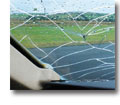 The flight crew initiated an emergency return to an Irish airport after the Gulfstream IV-SP’s windshield cracked on takeoff in instrument meteorological conditions. The aircraft was outside the localizer coverage area when the crew armed the autopilot approach mode. As a result, the autopilot captured a false localizer signal. [Download PDF 4 pages. 405K] The flight crew initiated an emergency return to an Irish airport after the Gulfstream IV-SP’s windshield cracked on takeoff in instrument meteorological conditions. The aircraft was outside the localizer coverage area when the crew armed the autopilot approach mode. As a result, the autopilot captured a false localizer signal. [Download PDF 4 pages. 405K]
Back to top
Helicopter Safety
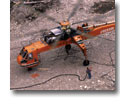 In September 2005, the members of the International Helicopter Safety Symposium met in Montreal and formed the International Helicopter Safety Team (IHST), taking on the goal of reducing civil helicopter accidents by 80 percent within 10 years. [Download PDF 6 pages. 771K] In September 2005, the members of the International Helicopter Safety Symposium met in Montreal and formed the International Helicopter Safety Team (IHST), taking on the goal of reducing civil helicopter accidents by 80 percent within 10 years. [Download PDF 6 pages. 771K]
Back to top
Airport Ops
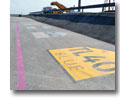 Airports are committed to providing sufficient navigation aids to maintain safety at the required level. In addition to lighting systems and the support of controllers, surface markings are Airports are committed to providing sufficient navigation aids to maintain safety at the required level. In addition to lighting systems and the support of controllers, surface markings are
of great importance, especially in adverse weather or critical lighting conditions. Major efforts have been made over the years by the ICAO to develop standards for visual aids to improve safety for moving aircraft on the ground.
[Download PDF 3 pages. 334K]
Back to top
Business Ops
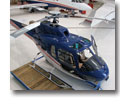 Most operators practice some form of overall safety management, especially if they have an up-to-date flight operations manual that contains policies, standards and procedures that directly apply to their operation. What is missing is the integration of these elements into a system of interlocking policies and procedures that considers all elements in concert. [Download PDF 5 pages. 289K] Most operators practice some form of overall safety management, especially if they have an up-to-date flight operations manual that contains policies, standards and procedures that directly apply to their operation. What is missing is the integration of these elements into a system of interlocking policies and procedures that considers all elements in concert. [Download PDF 5 pages. 289K]
Back to top
Ground Safety
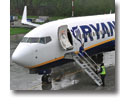 A 3-year-old girl’s fall from the forward integral airstair of a Ryanair Boeing 737-800 — an approximate height of 8.5 to 9.0 ft (2.6 to 2.7 m) — has prompted the U.K. Air Accidents Investigation Branch to issue several safety recommendations, including one for airstair modification. [Download PDF 3 pages. 352K] A 3-year-old girl’s fall from the forward integral airstair of a Ryanair Boeing 737-800 — an approximate height of 8.5 to 9.0 ft (2.6 to 2.7 m) — has prompted the U.K. Air Accidents Investigation Branch to issue several safety recommendations, including one for airstair modification. [Download PDF 3 pages. 352K]
Back to top
Strategic Issues
 Methods for identifying unexpected risks in the Next Generation Air Transportation System should be enhanced without delay as part of implementing the safety management system of the U.S. Federal Aviation Administration, says an independent review. Auditors urge quicker upgrades of U.S. safety data analysis to discover national risk trends. [Download PDF 4 pages. 184K] Methods for identifying unexpected risks in the Next Generation Air Transportation System should be enhanced without delay as part of implementing the safety management system of the U.S. Federal Aviation Administration, says an independent review. Auditors urge quicker upgrades of U.S. safety data analysis to discover national risk trends. [Download PDF 4 pages. 184K]
Back to top
Helicopter Safety
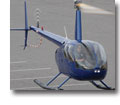 The pilot of a Robinson Helicopter R44 Raven had deviated from the regular scenic tour route in a mountainous area of Western Australia and was flying slow and close to the ground when the helicopter crashed, killing the pilot and all three passengers, the Australian Transport Safety Bureau says. [Download PDF 4 pages. 435K] The pilot of a Robinson Helicopter R44 Raven had deviated from the regular scenic tour route in a mountainous area of Western Australia and was flying slow and close to the ground when the helicopter crashed, killing the pilot and all three passengers, the Australian Transport Safety Bureau says. [Download PDF 4 pages. 435K]
Back to top

Executive’s Message
So, why do I think this is a safety problem? Because I keep seeing evidence that we don’t have the systems and discipline required to face a sustained personnel shortage. [Download PDF 1 page. 92K]
Back to top
Editorial Page
Make no mistake, the effort to catapult air traffic control technology to a revolutionary and vastly more capable level in the United States and Europe is a very, very big deal, not only in terms of scope and cost but also in terms of the consequences of success or failure. [Download PDF 1 page. 69K]
Back to top
Air Mail
In the July AeroSafety World cover story [p. 12] on checklists and monitoring, the authors make the point that the use of “flow and check” procedures may increase the chance of pilots committing errors of omission. [Download PDF 1 page. 154K]
Back to top
Safety Calendar
A listing of aviation safety-related conferences, seminars and meetings. [Download PDF 1 page. 71K]
Back to top
In Brief
The U.S. Federal Aviation Administration (FAA) has proposed a new rule to help prevent commercial pilots from flying while fatigued. The proposal would establish new limitations for flight and duty time, and new rest requirements — all based on fatigue science, the FAA said. [Download PDF 3 pages. 207K]
Back to top
Foundation Focus
Lead aviation safety auditors from Australia, South Africa and the United Kingdom this month became the first auditor group to complete the Foundation’s new training program, qualifying them to conduct BARS audits of aviation service providers.
[Download PDF 1 page. 107K]
Back to top
Data Link
Ground operations accidents and incidents were dominated by one causal factor — failure to comply with clearances — according to a study conducted by the Australian Transport Safety Bureau of occurrences at Australian airports, 1998–2008.
[Download PDF 4 pages.
429K]
Back to top
Info Scan
This program is based on the tentative findings of its own unofficial investigative team, which did not have access to the recovered parts of the A330 but was able to look at photographs of the parts.
[Download PDF 4 pages. 125K]
Back to top
On Record
The following information provides an awareness of problems in the hope that they can be avoided in the future. The information is based on final reports by official investigative authorities on aircraft accidents and incidents. [Download PDF 8 pages. 291K]
Back to top
|