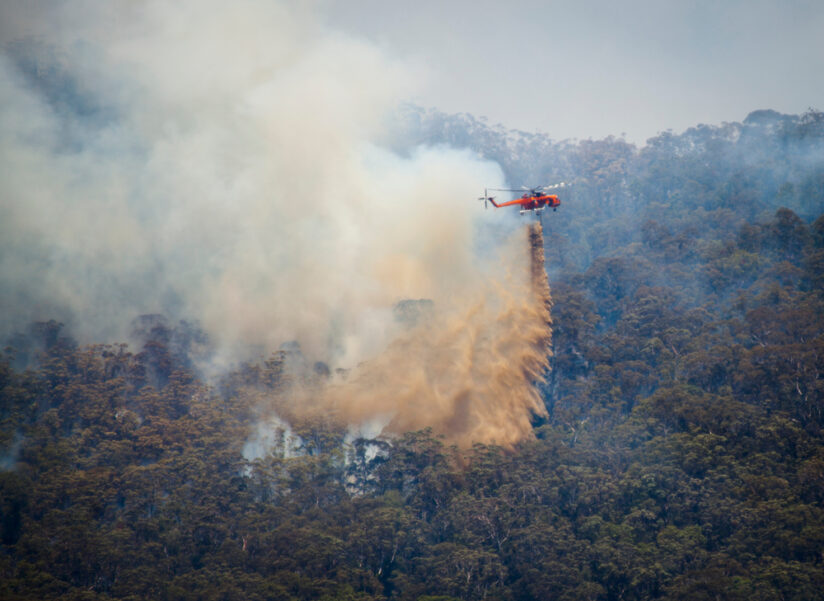
Ninety-one of 148 Australian aerial firefighters (61 percent) questioned in a firefighting survey said they had experienced a safety event between 2017 and 2022, but of the 91, just over half said they had reported the experience to authorities, the Australian Transport Safety Bureau (ATSB) says.
In a report issued Oct. 21, the ATSB said the survey —the second installment of three planned sections of the ATSB’s aerial firefighting safety study — found respondents were critical of certain aspects of the on-the-job reporting culture. For example, only 25 percent reported receiving feedback from their agencies and had witnessed a quick resolution of the problem they reported or a positive change, the survey said. Nevertheless, 82 percent said they had not been dissuaded from reporting a problem.
The ATSB said the survey was part of a larger safety study designed to identify systemic safety issues “and other learning opportunities that could enhance the safety of aerial firefighting operations.”
ATSB data show that the number of aerial firefighting events in each fiscal year has increased steadily since 2016–2017 and that since 2016, the agency has begun 17 accident and incident investigations involving aerial firefighting aircraft. The increase in aerial firefighting activity is likely to continue, the report said, citing a 2024 government climate report that forecast continued warming of Australia’s climate and an accompanying increase in extreme weather and the length of the fire season.
“The rapid increase of firefighting activity means increased density of aircraft over the fireground, putting a significantly higher demand on tasking, coordination and communication processes,” the report said.
Data show that in the 2019–2020 fire season, 328 aircraft flew 79,705 hours, about four times more than the previous season, according to the National Aerial Firefighting Centre (NAFC).
Eighty percent of respondents had more than 5,000 flight hours, and half that number had more than 10,000 hours; more than half of the respondents had at least 1,000 hours of aerial firefighting time. Fifty-seven percent flew airplanes, and the other 43 percent, helicopters.
The survey, which questioned 149 pilots registered with the NAFC in an effort to better understand their views on the hazards they face, focused on four areas — tasking, communication, reporting culture, and safety culture. (In answers to some questions, one pilot’s responses were missing, and total responses to those questions totaled only 148.)
Most of the respondents’ concerns involved the reporting culture and safety culture; they were “largely positive” about tasking, with most saying that “task demands were realistic,” the report said. In addition, they said they had not felt fatigue that affected their job performance, and that they were “encouraged to prioritise safety over task completion,” the report said. The report also characterized as largely positive their responses to questions about communication between pilots and the agencies they worked for and about radio communication around the fireground.
Prioritizing Safety
Nearly 60 percent of respondents said that, during the survey period, from 2017–2022, they had been encouraged to prioritize safety over task completion, and 51 percent said they had not been subject to external pressure to accept or complete an assignment in adverse operating conditions; however, 35 percent reported that they had felt such pressure, often in the form of repeated requests to reconsider, being ordered to conduct the task, or threats of repercussions for not flying.
Sixty-nine percent said that they had, in fact, refused to carry out an assigned task because of safety concerns, sometimes turning down more than one assignment; 31 percent had never cited safety in refusing a task. Weather was the primary reason for refusing an assignment, but several other factors also were cited, including “insufficient daylight hours” and aircraft serviceability.
Just over half said they believed that people in decision-making positions who directed firefighting aircraft had insufficient training and experience to do their jobs.
Reporting Culture
Earlier studies noted a tendency toward the underreporting of incidents and attributed that tendency to “precarious employment conditions,” a “fear of retribution,” and a fear of potential adverse effects on a pilot’s career, the report said.
About 39 percent of respondents in this survey said they had not experienced an incident while engaged in aerial firefighting during the study period. Of the 61 percent who reported incidents, 39 percent said they had experienced one or two, 14 percent said they had experienced three or four, and 9 percent said they had been involved in four or more.
Of those who reported serious incidents, nearly half said the incident was a near-collision with another aircraft while a third cited hazardous weather conditions, and 26 percent cited poor communication and traffic management.
About 20 percent of those who reported incidents said they were not comfortable using formal channels to do so, and about one-third said they “disagreed” or “strongly disagreed” with the statement that they could report without fear of repercussions, the survey found.
Of those who reported incidents, about one-quarter agreed or strongly agreed that there had been “a quick resolution” of the report, and about the same number said they had received feedback after filing their reports.
Questioned about what changes they would like to see, respondents offered a wide range of answers, naming as the areas most in need of improvement, “fire agency personnel aviation knowledge/experience” and “improved aircrew raining, mentorship, and currency.”
Image: Jason Benz Bennee/Shutterstock.com
This article is based on ATSB Transport Safety Report, Safety Study–Part B AS-2021-015b, “Analysis of Aerial Firefighting Pilots’ Survey Responses Regarding Aviation Safety.” Final report published Oct. 21, 2026.