Reliance on multinational flight crews presents operational complexities and challenges that extend beyond standard crew resource management (CRM). Airlines operating with pilots from diverse cultural backgrounds must address how cultural differences influence communication patterns, authority structures, and decision-making processes on the flight deck. While the International Civil Aviation Organization’s (ICAO’s) English proficiency standards and standardized phraseology provide a common operational language, linguistic competence alone does not eliminate communication barriers rooted in cultural attitudes toward hierarchy, assertiveness, and teamwork.
This article examines how cultural differences manifest in multinational cockpit operations, assesses the effectiveness of current CRM training programs in addressing these differences, and explores practical strategies that airlines employ to mitigate communication risks while maintaining operational safety standards.
An example is the May 22, 2010, crash of Air India Express Flight 812, a Boeing 737-800; the crash killed 158 of the 166 passengers and crew and destroyed the airplane. The flight crew consisted of a British captain and an Indian first officer (FO). According to the official accident investigation report, the authority relationship between the captain and the FO appears to have reduced the performance of the crew.
“The captain had ignored the submissive concern of the first officer about the unstabilised condition of aircraft during approach and landing,” the report said. The report emphasizes that an optimal trans-cockpit authority gradient is essential for effective crew coordination, but in this case the gradient was steep because of the assertive captain and submissive FO. “This steep ‘trans-cockpit authority gradient’ limited the communication skills of both the crewmembers, especially the first officer, who tried to draw the attention of the captain to conduct a ‘go-around’ due to unstabilised conditions,” the report states. “The reasons appear to be the authoritative style of the captain and desire of the first officer to avoid conflict.”
“Socio-cultural factors also appeared to have played a role in this accident. The first officer had failed to be more assertive when the captain was continuing the approach in unstabilised conditions,” the report says. “Socio-psychological influences can interfere with the proper exchange of briefing and standard callouts and thus affect safe operations.”
Communication and Teamwork
Franco Narcisi, chief pilot at Avion Express, a global ACMI1 airline operating across multiple international bases, explains: “Communication is not only about words; it is also about cultural differences — how we receive information and how we speak to each other. When it comes to language, we are not unique in this: Pilots are accustomed to working alongside colleagues from many different countries. At Avion Express, our team represents more than 69 nationalities, with around 50 nationalities in the cockpit alone. Even though English is the company’s official language, it is still important to acknowledge and understand cultural differences.”
According to Nathan Johnston, human factors training manager at Air New Zealand, cultural differences influence communication dynamics and teamwork as well as leadership capabilities in multinational flight crew operations. “Achieving effective bidirectional communication demands appropriate management of potential cultural barriers, though addressing every nuance presents challenges, given the extensive variety of possible cultural combinations among crewmembers,” he says. “As our crew resource management (CRM) training and standard operating procedures (SOPs) aim to establish a standard operating environment focussing on situational awareness and team dynamics, differences are encouraged to be identified and discussed preemptively by the whole crew whenever appropriate, and the emphasis is to create a collaborative and open environment that respects and supports the role of authority.”
Cultural differences affect how pilots verbally communicate; use and interpret non-verbal communication in a manner appropriate to the organizational and social structure; manage workload; and make shared decisions — all of which are central to aviation safety, explains senior CRM instructor Antonio De Marchi. “Differences in attitudes toward hierarchy and authority — often described as power distance in cultural psychology — have a major impact on cockpit decision-making and communication,” he says. “These attitudes shape how captains lead, how first officers respond, and how openly concerns are raised. Because aviation relies on clear, assertive teamwork, mismatched expectations can affect safety and efficiency.”
In relation to hierarchy and authority in decision-making — while the captain is ultimately responsible and legally accountable — decisions are made collectively with the entire crew, says Narcisi. “When time permits, we coordinate with the first officer and cabin crew. For instance, if we have a sick passenger, the cabin crew may be better informed about the situation and can provide input to divert the aircraft,” he says. “So, while the hierarchy is officially clear, with the captain at the top, in practice, decision-making involves the entire crew.”
Differing Cultures
According to Johnston, different national aviation safety cultures can substantially affect crew dynamics in multinational operations. “Divergent attitudes toward risk assessment, procedural adherence, and communication styles within operational contexts may compromise teamwork cohesion and effective interaction among pilots, cabin crew, ground personnel, and operational staff, each potentially representing different cultural backgrounds,” he says. “Developing an optimal professional culture that supersedes these national differences requires depth in CRM training which focusses on communication boundaries, situational awareness and team dynamics for all crewmembers operating together in the shared aviation environment. This requires a philosophical approach across all teams in the airline.”
National safety culture is influenced by a country’s norms regarding authority, communication, training, regulation, and attitudes toward reporting and errors, affirms De Marchi. “These differences directly affect cockpit behaviour in multinational crews. Unfortunately, some countries still have high power-distance cultures where questioning authority is discouraged, captains are treated as unquestionable leaders, and subordinates hesitate to challenge decisions,” he says. “Several significant incidents and accidents have shown that multicultural crew composition — particularly cultural differences in communication, authority, and language — can contribute to unsafe cockpit dynamics. These events have led to substantial changes in airline training, CRM philosophy, safety policies, and international regulatory standards.”
Events of a multicultural nature are limited and seldom raised as an issue in Air New Zealand, says Johnston. “However, of the few that could be considered to have a multicultural element, most had other significant contributing elements or areas that required further support beyond a multicultural element in finding a solution (i.e., conflict resolution, effective workload management, or problem-solving and decision-making would also have been relevant in the same events),” he says. “We approach these situations by focusing on what human competency had the largest bearing on the outcome, and frequently, it is not of a multicultural nature.”
Phraseology and English Proficiency
While all CRM elements are affected by standardized phraseology and ICAO English proficiency, communication, teamwork, leadership, and team situational awareness are particularly influenced, explains Johnston. “Managing language challenges requires considerable flexibility from the team due to the vast array of cultural combinations possible, and no single CRM training event can fully address all nuances,” he says. “To appropriately address these areas, specific effort is made in training, primarily focussing on how situational awareness and team dynamics are employed by expert operators rather than specific cultural aspects and differences like hierarchy attitudes (i.e., industry best practice).”
ICAO phraseology is so highly standardized because it helps carriers avoid misunderstandings with control towers, says Narcisi. “A period of adaptation is still necessary when changing bases, though, as every controller has a different accent. For instance, … flying from our base in Antalya, Turkey, to Germany requires adjusting our ‘listening mode’ from Turkish-accented English to German-accented English,” he says. “Europeans generally adapt quickly, but pilots from South America may need more time since they tend to speak Spanish more than English in their daily lives.”
While standardized phraseology and ICAO English proficiency are essential, they are not sufficient on their own, according to De Marchi. “They dramatically reduce misunderstanding, but important gaps remain due to accent, tone, culture, workload, and real-world deviations,” he says. “So, it is very important that flight crewmembers understand how important it is to communicate effectively and efficiently through standard callouts and phraseology. Being aware of this can help manage communication more effectively.”
The pilot hiring process at Avion Express begins by verifying the English proficiency levels listed on prospective hires’ licenses, Narcisi says. “The scale runs from 1 to 6, with 4 being the minimum acceptable one. Level 4 requires renewal every two years; level 5, every four years; and level 6 (native proficiency) doesn’t require renewal at all,” he says. “This is followed by verification during interviews and simulator sessions, designed to gauge pilots’ ability in communicating with control towers.”
In Spanish-speaking countries, ground personnel — such as ramp agents and fueling crews — often do not speak English, observes Narcisi. “For this reason, we try to ensure that at least one Spanish-speaking pilot is always in the cockpit — this helps us in handling communications with ground staff who may only know basic-scenario English,” he says. “More broadly, crew composition is managed with specific destinations in mind, although it is not always possible to provide local-language speakers for every route. For instance, we currently do not have any Vietnamese speakers for Vietnam or Turkish speakers for Turkey. But whenever we can mitigate communication risks, we do.”
CRM Training Effectiveness
According to De Marchi, current CRM training programs as devised under applicable regulations are reasonably effective, particularly in enhancing attitudes, communication, teamwork, and safety awareness. “Their effectiveness, however, can be limited when applied to multicultural or multinational cockpits, unless they are thoughtfully adapted,” he says. “Competency-based training and assessment (CBTA) can be a very effective method for improving cross-cultural performance in flight crews, not because it teaches ‘culture’ directly, but because it trains pilots around observable behaviours rather than cultural norms. This makes it one of the strongest tools for reducing the effects of cultural differences in multinational cockpits.”
CRM is formally defined and integrated throughout training events and SOPs, explains Johnston. “From a multicultural standpoint, the programmes’ success hinges on a robust CRM assessment policy that enables objective evaluation while reducing trainer subjectivity, thereby steering training toward resilient and measurable outcomes,” he says. “As an airline, Air New Zealand frequently reviews industry incidents and accidents in induction, upgrade, and recurrent training courses, where cultural differences are frequently identified and discussed. Our CRM training encourage[s] healthy self-reflection and awareness; where one culture may differ, we look for similarities and learnings in the human experience and explore how that may affect our culture in a similar way.”
Avion Express conducts two types of CRM training annually: one exclusively for pilots, run by a pilot CRM trainer, and another that includes the cabin crew. Instructors present real-life scenarios to observe how the crews react and whether they make decisions individually or coordinate as a team, says Narcisi. “Given our company’s workforce — which can include personnel from up to 55 different countries, depending on the month — the CRM programme does address cultural differences. The view is that aviation is inherently multicultural, with many airlines such as Ryanair, Wizz Air, Volotea, and easyJet operating with multinational crews. The same applies to aircraft, crew, maintenance, and insurance (ACMI) operators and Middle East carriers,” he says.
Managing multinational flight crews requires a systematic approach that extends beyond regulatory compliance with English proficiency standards. Effective CRM training must address cultural differences in communication styles, authority perceptions, and decision-making frameworks while fostering a professional culture that supersedes national norms. CBTA offers a practical methodology for addressing cultural variations by focusing on observable behavior rather than cultural attributes, reducing trainer subjectivity and improving measurable outcomes.
While standardized phraseology and ICAO protocols provide essential frameworks, operational effectiveness depends on adaptive strategies, including strategic crew pairing, preflight cultural discussions, and training scenarios that reflect real-world multicultural dynamics. When cultural elements contribute to safety events, they typically intersect with other competency areas, including conflict resolution and workload management. Therefore, rather than treating cultural differences as isolated factors, training programs should integrate them within broader human factors frameworks that emphasize situational awareness, team dynamics, and collaborative decision-making across all operational contexts.
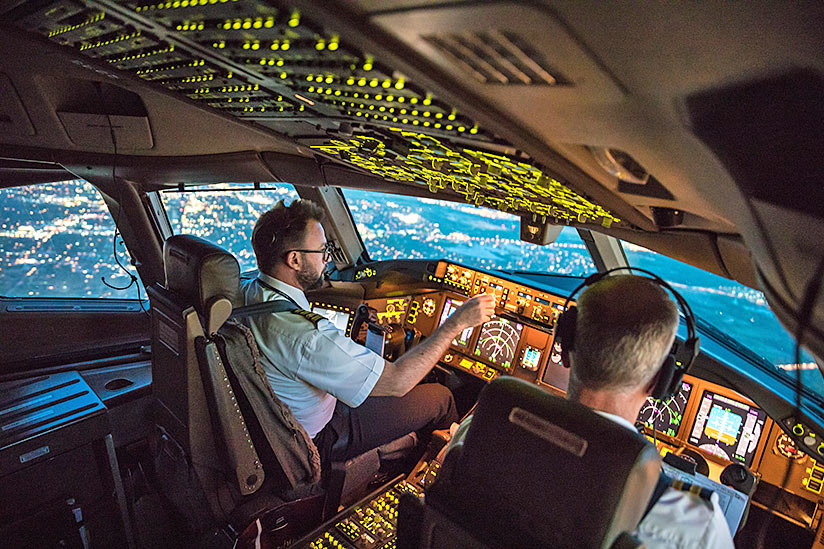
Image: © rathke | iStockphoto
Mario Pierobon, Ph.D., is the owner and scientific director of a safety consulting and training organization.
Note
- An ACMI airline provides air carriers with supplemental aircraft, crewmembers, maintenance, and insurance.