Partners and Programs:
  • BARS
  • SKYbrary
  • ASN
  • Contact Us
  • Members' Center
  • Login
  • Support Aviation Safety

FSF-80th-Logo_500px

  • Industry Updates
  • The Foundation
    • About the Foundation
    • 80 Years of Global Aviation Safety Leadership
    • Asia Pacific Centre for Aviation Safety
    • Founders
    • Mission
    • History
    • Leadership
    • Officers and Staff
    • Media/Communications
    • Aviation Award & Scholarship Programs
    • Work with Us
    • Join Us
  • AeroSafety World
  • Events
  • Toolkits & Resources
    • Safety Leadership Principles
    • Mental Health and Wellness
    • Global Action Plan for the Prevention of Runway Incursions (GAPPRI)
    • Fatigue Management
    • Flight Path Monitoring
    • Global Action Plan for the Prevention of Runway Excursions (GAPPRE)
    • Go-Around Project
    • Global Safety Assessment Project
    • Learning From All Operations
    • Past Safety Initiatives
    • Pilot Training and Competency
    • Special Reports
    • ASN Accident Dashboards
    • ASN Accident Data
    • Videos
  • Industry Updates
  • The Foundation
    • About the Foundation
    • 80 Years of Global Aviation Safety Leadership
    • Asia Pacific Centre for Aviation Safety
    • Founders
    • Mission
    • History
    • Leadership
    • Officers and Staff
    • Media/Communications
    • Aviation Award & Scholarship Programs
    • Work with Us
    • Join Us
  • AeroSafety World
  • Events
  • Toolkits & Resources
    • Safety Leadership Principles
    • Mental Health and Wellness
    • Global Action Plan for the Prevention of Runway Incursions (GAPPRI)
    • Fatigue Management
    • Flight Path Monitoring
    • Global Action Plan for the Prevention of Runway Excursions (GAPPRE)
    • Go-Around Project
    • Global Safety Assessment Project
    • Learning From All Operations
    • Past Safety Initiatives
    • Pilot Training and Competency
    • Special Reports
    • ASN Accident Dashboards
    • ASN Accident Data
    • Videos
  • Contact Us
  • Members' Center
  • Login
  • Support Aviation Safety
Partners and Programs:
  • BARS
  • SKYbrary
  • ASN

FLIGHT SAFETY FOUNDATION HEADQUARTERS

701 N. Fairfax Street, Suite 250,
Alexandria, Virginia 22314

Phone: +1 703 739 6700 Fax: +1 703 739 6708

  • Aviation Safety Experts
  • AeroSafety World
  • FAA Publishes Airworthiness Criteria for 10 Drone Models

Unmanned Aircraft Systems, News

FAA Publishes Airworthiness Criteria for 10 Drone Models

The agency’s move is intended to expand the role of drones in package delivery.

by FSF Editorial Staff | December 23, 2020

The U.S. Federal Aviation Administration (FAA) has taken what it calls a crucial step to enabling the expanded delivery of packages by drones with the publication of airworthiness criteria for the proposed certification of 10 drones as special class aircraft.

The FAA said in late November that the 10 sets of airworthiness criteria, published in in the Federal Register, provide for a safety level equivalent to that required by existing standards for the airworthiness of other categories of aircraft.

Dr. Michael C. Romanowski, the FAA’s director of aircraft certification service policy and innovation, added, “The development of airworthy, durable, and reliable unmanned aircraft is a crucial step forward for this innovative sector. Type certification will help increase both public and regulatory confidence in drone technology as operations become more advanced.”

The airworthiness criteria apply to drones manufactured by 3D Robotics, Airobotics, Amazon, Flirtey, Flytrex  Matternet, Percepto, Telegrid, Wingcopter and Zipline.

The affected drones range in weight from 5 lb to 89 lb (2.3 kg to 40.4 kg). All vehicles are electric, and they include both fixed wing and rotorcraft drones.

The FAA emphasized that publication of the standards is “a step in the certification process and does not imply these applicants have earned type certificates. Final determination of whether a specific drone meets FAA safety requirements will occur after the applicant demonstrates they have complied with these requirements.”

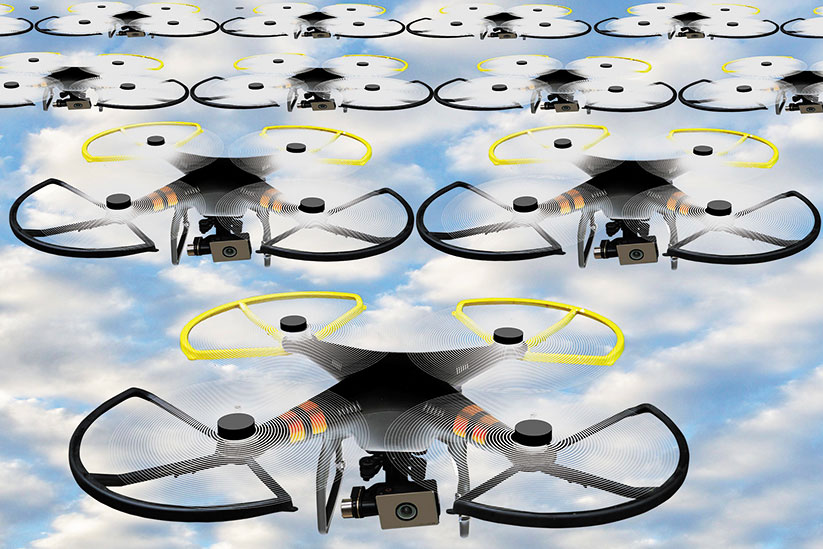
Photo credit: © WestWindGraphics | iStockphoto

 

Share:

Print:

Key Safety Issues

  • Controlled Flight Into Terrain (CFIT)
  • Loss of Control–In Flight (LOC-I)
  • Mechanical Issues
  • Runway Safety (approach and landing)
  • Sabotage/Intentional Acts
  • Midair Collisions (MAC)
  • Runway Safety (Conflicts)
  • Wildlife Issues
  • Fatigue
  • Cabin Safety
  • Emerging Safety Issues
    • Lithium Batteries
    • Safety Information Sharing and Protection
    • Unmanned Aircraft Systems

Related Content

Accident Investigation, uncrewed aircraft

Drone Swarm Goes Awry

The ground control computer lost contact with about 400 drones being used in a light…

by Linda Werfelman

Accident Investigation, News, uncrewed aircraft

Safety News

Fuel cutoff switches moved to OFF seconds before Air India crash, early investigation report says.

by FSF Editorial Staff

Airport Ops, Aviation Industry Data, News

Safety News

Boeing is forecasting a need for 2.4 million new aviation personnel in the next 20…

by FSF Editorial Staff

Read more articles

1920 Ballenger Ave., 4th Floor, Alexandria, VA 22314

Phone: +1 703 739 6700 Fax: +1 703 739 6708

Projects & Partners

  • Basic Aviation Risk Standard
  • SKYbrary
  • Aviation Safety Network
  • Asia Pacific Centre for Aviation Safety
  • Donate
  • Advertise on our website
  • Sponsor & Exhibit at our Events
  • Work with Us
  • Contact Us
  • Site Map
  • Privacy

© 2026 Flight Safety Foundation

Join our group on LinkedIn