Partners and Programs:
  • BARS
  • SKYbrary
  • ASN
  • Contact Us
  • Members' Center
  • Login
  • Support Aviation Safety

FSF-80th-Logo_500px

  • Industry Updates
  • The Foundation
    • About the Foundation
    • 80 Years of Global Aviation Safety Leadership
    • Asia Pacific Centre for Aviation Safety
    • Founders
    • Mission
    • History
    • Leadership
    • Officers and Staff
    • Media/Communications
    • Aviation Award & Scholarship Programs
    • Work with Us
    • Join Us
  • AeroSafety World
  • Events
  • Toolkits & Resources
    • Safety Leadership Principles
    • Mental Health and Wellness
    • Global Action Plan for the Prevention of Runway Incursions (GAPPRI)
    • Fatigue Management
    • Flight Path Monitoring
    • Global Action Plan for the Prevention of Runway Excursions (GAPPRE)
    • Go-Around Project
    • Global Safety Assessment Project
    • Learning From All Operations
    • Past Safety Initiatives
    • Pilot Training and Competency
    • Special Reports
    • ASN Accident Dashboards
    • ASN Accident Data
    • Videos
  • Industry Updates
  • The Foundation
    • About the Foundation
    • 80 Years of Global Aviation Safety Leadership
    • Asia Pacific Centre for Aviation Safety
    • Founders
    • Mission
    • History
    • Leadership
    • Officers and Staff
    • Media/Communications
    • Aviation Award & Scholarship Programs
    • Work with Us
    • Join Us
  • AeroSafety World
  • Events
  • Toolkits & Resources
    • Safety Leadership Principles
    • Mental Health and Wellness
    • Global Action Plan for the Prevention of Runway Incursions (GAPPRI)
    • Fatigue Management
    • Flight Path Monitoring
    • Global Action Plan for the Prevention of Runway Excursions (GAPPRE)
    • Go-Around Project
    • Global Safety Assessment Project
    • Learning From All Operations
    • Past Safety Initiatives
    • Pilot Training and Competency
    • Special Reports
    • ASN Accident Dashboards
    • ASN Accident Data
    • Videos
  • Contact Us
  • Members' Center
  • Login
  • Support Aviation Safety
Partners and Programs:
  • BARS
  • SKYbrary
  • ASN

FLIGHT SAFETY FOUNDATION HEADQUARTERS

701 N. Fairfax Street, Suite 250,
Alexandria, Virginia 22314

Phone: +1 703 739 6700 Fax: +1 703 739 6708

  • Aviation Safety Experts
  • Industry Updates
  • Too Fatigued to Fly?

News, Fatigue, Fitness for Duty

Too Fatigued to Fly?

by FSF Editorial Staff | January 24, 2019

pilot fatigue

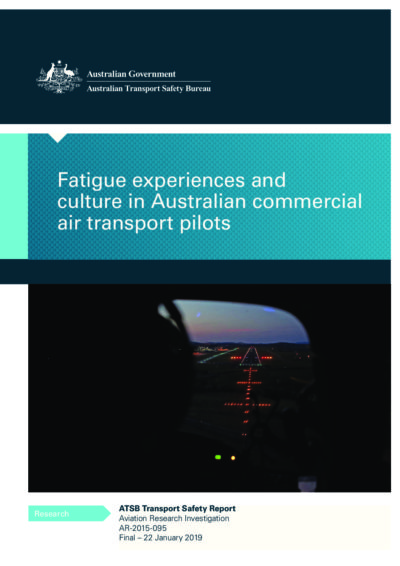
One-third of pilots surveyed by the Australian Transport Safety Bureau (ATSB) said they had removed themselves from duty because of fatigue at least once during the 12 months before they took the 2016 survey, the ATSB said in a report released Tuesday.

“When they did this, they reportedly felt it left a negative impression with management,” ATSB Chief Commissioner Greg Hood said.

The report, Fatigue Experiences and Culture in Australian Commercial Air Transport Pilots, said that more than half of the 625 pilots responding to the online survey between June and November of 2016 said they had gotten at least seven hours of sleep in the previous 24 hours; more than 60 percent said they had slept more than 14 hours during the 48 hours at the end of their most recent duty period.

Survey responses indicated that fatigue and fatigue-related issues were uncommon, although some pilots work in conditions that are conducive to fatigue.

“While small in number, some pilots did report operating in conditions consistent with thresholds that have been showed to be associated with impaired performance due to fatigue at the end of their last flight,” Hood said.

He noted that the survey found “a small but significant number of pilots, 10 percent and 17 percent, who reported obtaining less than five hours of sleep in the previous 24 hours or less than 12 hours in the previous 48 hours, respectively, at the end of their last flight. These sleep thresholds have been shown to be associated with impaired performance.”

International and domestic jet airline pilots were more likely than regional, charter and aeromedical pilots to have obtained less sleep while on duty than during their time at home, the report said. One-third of respondents said they obtained the same amount of sleep at home as they did while on duty, about half said they obtained less sleep while on duty, and 15 percent of international pilots said they had no rest during their last international flight.

The Australian Civil Aviation Safety Authority currently is consulting with industry representatives about introducing new fatigue rules in accordance with Civil Aviation Order 48.1, Instrument 2019, Modernising Australia’s Fatigue Rules.

High capacity regular public transport operations are required to transition to the new rules by Sept. 30; other operators face a March 26, 2020, deadline.

“The responsibility to manage the risk of fatigue lies with both pilots and operators,” Hood said. “Pilots need to use rest periods to get adequate sleep and remove themselves from duty if affected by fatigue, and operators need to have policies in place to manage fatigue and create a work culture where pilots and crew can report fatigue in a supportive environment.”
Share:

Print:

Key Safety Issues

  • Controlled Flight Into Terrain (CFIT)
  • Loss of Control–In Flight (LOC-I)
  • Mechanical Issues
  • Runway Safety (approach and landing)
  • Sabotage/Intentional Acts
  • Midair Collisions (MAC)
  • Runway Safety (Conflicts)
  • Wildlife Issues
  • Fatigue
  • Cabin Safety
  • Emerging Safety Issues
    • Lithium Batteries
    • Safety Information Sharing and Protection
    • Unmanned Aircraft Systems

Related Content

fatigue, News, Runway Safety

Watchlist, Revisited

Transport Canada seeks action on runway safety, fatigue, SMS, and oversight.

by FSF Editorial Staff

Aviation History, fatigue, News

80 Years of Aviation Safety

Fatigue management has progressed through the decades, from pilots ‘propping an eye open’ to data-driven…

by Linda Werfelman

ATC/ATM, fatigue, News

Better Rest for U.S. Air Traffic Controllers

2025 schedules will reflect new rest rules and overtime limits.

by Thomas W. Young

Read more articles

1920 Ballenger Ave., 4th Floor, Alexandria, VA 22314

Phone: +1 703 739 6700 Fax: +1 703 739 6708

Projects & Partners

  • Basic Aviation Risk Standard
  • SKYbrary
  • Aviation Safety Network
  • Asia Pacific Centre for Aviation Safety
  • Donate
  • Advertise on our website
  • Sponsor & Exhibit at our Events
  • Work with Us
  • Contact Us
  • Site Map
  • Privacy

© 2026 Flight Safety Foundation

Join our group on LinkedIn