Partners and Programs:
  • BARS
  • SKYbrary
  • ASN
  • Contact Us
  • Members' Center
  • Login
  • Support Aviation Safety

FSF-80th-Logo_500px

  • Industry Updates
  • The Foundation
    • About the Foundation
    • 80 Years of Global Aviation Safety Leadership
    • Asia Pacific Centre for Aviation Safety
    • Founders
    • Mission
    • History
    • Leadership
    • Officers and Staff
    • Media/Communications
    • Aviation Award & Scholarship Programs
    • Work with Us
    • Join Us
  • AeroSafety World
  • Events
  • Toolkits & Resources
    • Safety Leadership Principles
    • Mental Health and Wellness
    • Global Action Plan for the Prevention of Runway Incursions (GAPPRI)
    • Fatigue Management
    • Flight Path Monitoring
    • Global Action Plan for the Prevention of Runway Excursions (GAPPRE)
    • Go-Around Project
    • Global Safety Assessment Project
    • Learning From All Operations
    • Past Safety Initiatives
    • Pilot Training and Competency
    • Special Reports
    • ASN Accident Dashboards
    • ASN Accident Data
    • Videos
  • Industry Updates
  • The Foundation
    • About the Foundation
    • 80 Years of Global Aviation Safety Leadership
    • Asia Pacific Centre for Aviation Safety
    • Founders
    • Mission
    • History
    • Leadership
    • Officers and Staff
    • Media/Communications
    • Aviation Award & Scholarship Programs
    • Work with Us
    • Join Us
  • AeroSafety World
  • Events
  • Toolkits & Resources
    • Safety Leadership Principles
    • Mental Health and Wellness
    • Global Action Plan for the Prevention of Runway Incursions (GAPPRI)
    • Fatigue Management
    • Flight Path Monitoring
    • Global Action Plan for the Prevention of Runway Excursions (GAPPRE)
    • Go-Around Project
    • Global Safety Assessment Project
    • Learning From All Operations
    • Past Safety Initiatives
    • Pilot Training and Competency
    • Special Reports
    • ASN Accident Dashboards
    • ASN Accident Data
    • Videos
  • Contact Us
  • Members' Center
  • Login
  • Support Aviation Safety
Partners and Programs:
  • BARS
  • SKYbrary
  • ASN

FLIGHT SAFETY FOUNDATION HEADQUARTERS

701 N. Fairfax Street, Suite 250,
Alexandria, Virginia 22314

Phone: +1 703 739 6700 Fax: +1 703 739 6708

  • Aviation Safety Experts
  • Industry Updates
  • EASA Tallies 2016 Safety Recommendations

News, Safety Recommendation

EASA Tallies 2016 Safety Recommendations

by FSF Editorial Staff | May 15, 2017

Investigative authorities in 18 countries addressed a total of 88 aviation safety recommendations to the European Aviation Safety Agency (EASA) in 2016, EASA says.

The number of recommendations was essentially unchanged from the two previous years, EASA said in its 2016 Annual Safety Recommendations Review, issued in May. Click here to see the report.

The review noted that the 88 recommendations sprang from investigations of 39 accidents and 11 serious incidents, as well as one study. More than one-third of the recommendations were related to three major occurrences:

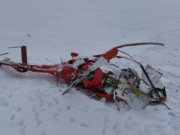
  • The Aug. 23, 2013, crash of a Eurocopter (now Airbus Helicopters) AS332 L2 Super Puma during an approach to Sumburgh Airport in the United Kingdom’s Shetland Islands resulted in 20 safety recommendations. All 16 occupants survived, but four had serious injuries. The U.K. Air Accidents Investigation Branch identified two causal factors — ineffective instrument monitoring and failure to acquire visual references by the minimum descent altitude.
  • The March 24, 2015, crash of an Airbus A320 in the French Alps resulted in six safety recommendations. The French Bureau d’Enquêtes et d’Analyses (BEA) said the accident, which killed all 150 passengers and crew, resulted from the copilot’s intentional actions.
  • The Oct. 28, 2011, loss of control crash of a Piper PA-31T during an approach to Toulouse-Blagnac Airport in France resulted in four safety recommendations. All four occupants were killed in the crash, which the BEA traced to a right engine problem that led to asymmetric thrust.

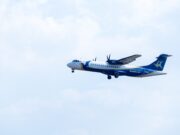
More than 60 percent of the recommendations involved fixed-wing aircraft, and 33 percent involved rotorcraft, the report said; the remainder involved other types of aircraft.

The U.K. generated more recommendations than any other country — 25, followed by France with 18 and Austria with eight, the report said. EASA member states issued 86 percent of all recommendations, the report said.

Share:

Print:

Key Safety Issues

  • Controlled Flight Into Terrain (CFIT)
  • Loss of Control–In Flight (LOC-I)
  • Mechanical Issues
  • Runway Safety (approach and landing)
  • Sabotage/Intentional Acts
  • Midair Collisions (MAC)
  • Runway Safety (Conflicts)
  • Wildlife Issues
  • Fatigue
  • Cabin Safety
  • Emerging Safety Issues
    • Lithium Batteries
    • Safety Information Sharing and Protection
    • Unmanned Aircraft Systems

Related Content

Accident/Incident Investigation, In-depth Feature, Runway Safety

No Alerts Before Runway Collision, NTSB Says

Preliminary report on fatal LaGuardia collision says ARFF vehicles lacked transponders.

by Linda Werfelman

Accident/Incident Investigation, Flight Ops, In-depth Feature, Maintenance Matters

‘Worn Beyond Limits’

The ATSB cited a maintenance technician’s failure to verify the completion of brake work as…

by Linda Werfelman

Accident/Incident Investigation, Ground Safety, News

Unexpected Collisions

Two airbridge operators told ATSB investigators that they were surprised when the airbridge twice struck…

by Linda Werfelman

Read more articles

1920 Ballenger Ave., 4th Floor, Alexandria, VA 22314

Phone: +1 703 739 6700 Fax: +1 703 739 6708

Projects & Partners

  • Basic Aviation Risk Standard
  • SKYbrary
  • Aviation Safety Network
  • Asia Pacific Centre for Aviation Safety
  • Donate
  • Advertise on our website
  • Sponsor & Exhibit at our Events
  • Work with Us
  • Contact Us
  • Site Map
  • Privacy

© 2026 Flight Safety Foundation

Join our group on LinkedIn

Sticky note tool

You're about to use our sticky note tool to submit website requests to our team. Click the "Accept" button to download a cookie that will authorize you to see and use the tool on this device.


To leave a Sticky note, click the comment button and then click anywhere on the page.

Sticky note